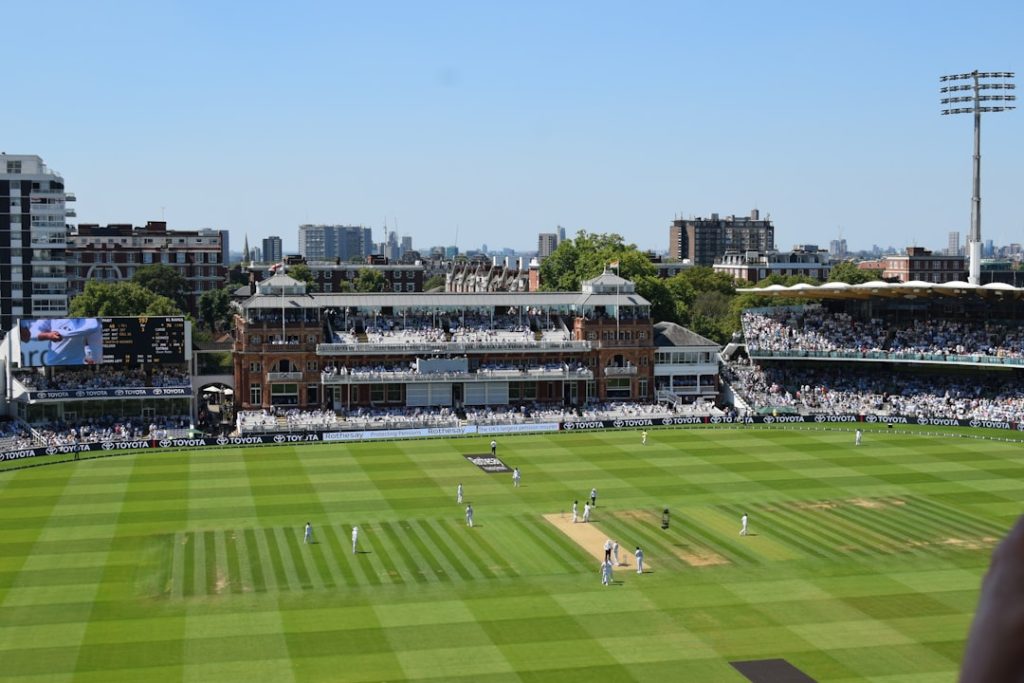
Tests, one-dayers and T20 are three different sports for betting purposes. How conditions and the toss move the true price, which markets are soft, and why in-play cricket suits the patient.
Cricket is a sport where the same two teams can meet on Tuesday and Thursday and have the correct price move by twenty points between them, because the pitch has dried out, the toss went the other way and the dew is expected after dark. That sensitivity to conditions is what makes it hard for bookmakers and rewarding for punters who pay attention.
Three formats, three games
Test cricket unfolds over five days, which means three results including the draw, weather that can remove a result entirely, and pitches that change character every session. It is the format where knowledge of conditions counts for most and where the draw price is most often wrong, in both directions.
One-day internationals are two-outcome affairs (ties are rare) driven by batting depth, the quality of the middle overs and, increasingly, whether a side bats or chases in conditions that favour one or the other.
T20 is the most volatile: twenty overs, a handful of big moments, and a match odds price that can flip twice in an innings. Franchise leagues add a further wrinkle: squads change every season, so last year’s form is a weaker guide than it is elsewhere.
The toss and the pitch
In no other mainstream sport does a coin toss shift the price so much. On a pitch expected to deteriorate, batting first in a Test can be worth a lot; in a day-night T20 where dew makes the ball hard to grip, chasing is often the advantage, and bookmakers price the pre-toss market accordingly with a wider margin. The trick is to know the ground, the time of year and the forecast before the market does, and to be ready to bet the moment the toss result is known and the market reprices.
Pitch reports are worth watching for the same reason. A green seamer, a bare turner, a flat road: each implies a different total, a different value in the top-bowler market and a different first-innings score.
Markets
- Match odds: the main market and, in internationals and the biggest franchise games, reasonably tight.
- First-innings runs (over/under a line, or run brackets): rewards knowing the ground averages and the conditions. Often softer than match odds because it requires more work to price.
- Top team batter and top team bowler: each-way-style markets where batting order, bowling roles and form matter. A new opener at a big price, or a bowler who takes the death overs on a slow surface, can be a good bet.
- Player runs and wickets lines: the modern staple, priced quickly and sometimes carelessly for lesser-known players.
- Session and over markets: high-frequency, high-margin, and mostly a way to lose money quickly. Leave them to the traders.
- Tournament outrights: worth a look before a franchise auction settles the squads, when the market is pricing on names rather than balance.
In-play
Cricket is one of the few sports where in-play betting genuinely suits a patient approach, because the game is long, the exchange markets are deep, and the price often overreacts to a wicket or a big over. Backing the side that has just lost a wicket at an inflated price, or laying the chasing side that has just hit two sixes, is a well-worn strategy. It requires watching the game, not the scorecard, and a stomach for volatility. If you are betting on a delayed stream against people at the ground, the usual warning applies.
Things that catch people out
- Weather rules. Bookmakers settle rain-affected matches differently; Duckworth-Lewis-Stern results can void some markets and settle others. Read the rules before betting on a day with a forecast.
- Home advantage is enormous in Test cricket and mostly about conditions: touring sides in unfamiliar conditions lose far more often than rankings suggest.
- Integrity. Cricket has had its scandals, mostly in low-profile matches with thin coverage. Stick to internationals and the major leagues.
Bring your questions and your angles to the Cricket forum, and as always, keep the results honest.
Please gamble responsibly and only stake what you can afford to lose. See our Responsible Gambling page.